FR
FR  EN
EN DE
DE

Tiana
+86-13143789995
10 % de remise en points sur les commandes d'impressions personnalisées. Activer maintenant
Besoin d'aide ? Parlez à un expert en impression dès aujourd'hui. Trouver un magasin
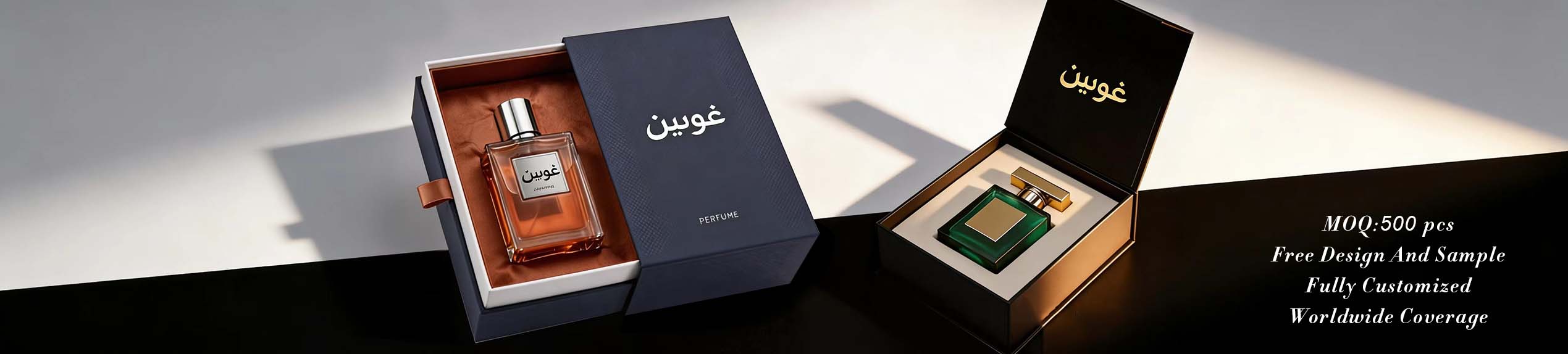
How to Choose the Right Insert for a Perfume Box: EVA, Sponge, Pulp, Paper Compared
The insert is what keeps a perfume bottle from rattling, scuffing, or breaking — yet it is the most overlooked line on a spec. This guide compares EVA, sponge, moulded pulp, and paper inserts on cushion, recyclability, and cost, then shows how to match the insert to bottle shape, channel, and sustainability goals.
What this guide covers
A perfume-box insert has four jobs: centre the bottle, cushion it from a 1.2 m drop, present it on opening, and protect coated glass from scuff. The insert decouples the glass from the carton wall by 3 to 5 mm of compressible material. Get the insert wrong and even a 2.0 mm rigid box will rattle and the bottle will arrive neck-struck.
EVA foam (2–3 mm, density 38–45 kg/m3) rebounds after compression and is the default for a bottle revealed in the lid. PU sponge is softer and cheaper but suffers compression set. Moulded pulp from 100% recycled fibre is recyclable and rigid enough for a standing bottle. A folded paper cradle is the lightest and cheapest but cushions least.
Table 1 — Insert options with cushion, recyclability, and cost.
| Insert | Cushion | Recyclable | Cost @5k | Best use |
|---|---|---|---|---|
| EVA 2–3 mm | High | No | 0.10–0.25 USD | Bottle-in-lid reveal |
| PU sponge | Medium | No | 0.06–0.15 USD | Budget cradle |
| Moulded pulp | High | Yes | 0.08–0.18 USD | Standing bottle |
| Paper cradle | Low | Yes | 0.03–0.08 USD | Light e-commerce |
Choose EVA when the bottle is the hero lying in the lid and you want it to spring back after handling. Choose moulded pulp when sustainability claims matter and the bottle stands. Choose paper when weight and cost dominate a lightweight e-commerce ship and the glass is sturdy.
A round 50 ml flacon at 100 x 50 x 40 mm needs a contoured cavity; EVA or pulp moulds to it. A square-edged bottle suits a die-cut paper or pulp tray. For international parcel transit, bias toward EVA or pulp with 5 mm wall clearance; for boutique hand-delivery, a paper cradle is acceptable.
Scuff protection
Whatever the insert, wrap the bottle in 30–40 gsm glassine or tissue so the foam or pulp does not mark coated glass. This step is missed on cheap samples and shows as micro-scuff at QC.
Die-cut the cavity to the bottle profile plus 1 mm, then rely on the 3–5 mm carton clearance for shock. For a 50 ml bottle the cavity is about 102 x 52 x 42 mm so the glass seats centrally with even wall pressure and no rattle on the shake test.
From the factory floor
EVA density 38–45 kg/m3 recommended; below 30 kg/m3 it bottoms out under drop.
Pulp wall thickness 2–3 mm; thinner walls crack at the 1.2 m ISTA 3A drop.
If the carton is FSC and mono-material, a PU or EVA insert breaks the recyclable claim. Moulded pulp or a folded paper cradle keeps the whole pack in the paper stream and often costs less than EVA. Reserve foam for where the reveal truly needs rebound.
FAQ
Which insert cushions best?
EVA 2–3 mm and moulded pulp give the highest cushion; paper cradle is weakest. Use pulp if recyclability matters, EVA if the bottle sits in the lid.
How much clearance should the insert leave?
Keep 3–5 mm from glass to carton wall; die-cut the cavity to bottle +1 mm and let the carton clearance absorb the drop.
Is EVA recyclable?
No — EVA is a foam not accepted in paper recycling. Use moulded pulp or paper cradle to keep a mono-material claim.
Do I need glassine wrap?
Yes for coated glass — 30–40 gsm glassine prevents foam/pulp scuff that fails luxury QC.
What density EVA should I specify?
38–45 kg/m3; below 30 kg/m3 the foam bottoms out under a 1.2 m drop and the bottle takes the impact.
Spec the right insert for your bottle
GooinPack designs EVA, pulp, sponge, and paper inserts die-cut to your bottle profile. Send dimensions for a cushioned, presentable cradle.
Request a QuoteReferences


Blog Plan du site Xml politique de confidentialité
Droit d'auteur
© 2026 GuangZhou GooinPack Packaging Co., Ltd. Tous droits réservés
.  RÉSEAU PRIS EN CHARGE
Liens amicaux : Blogger
Laisser un message
Numériser vers WhatsApp :